

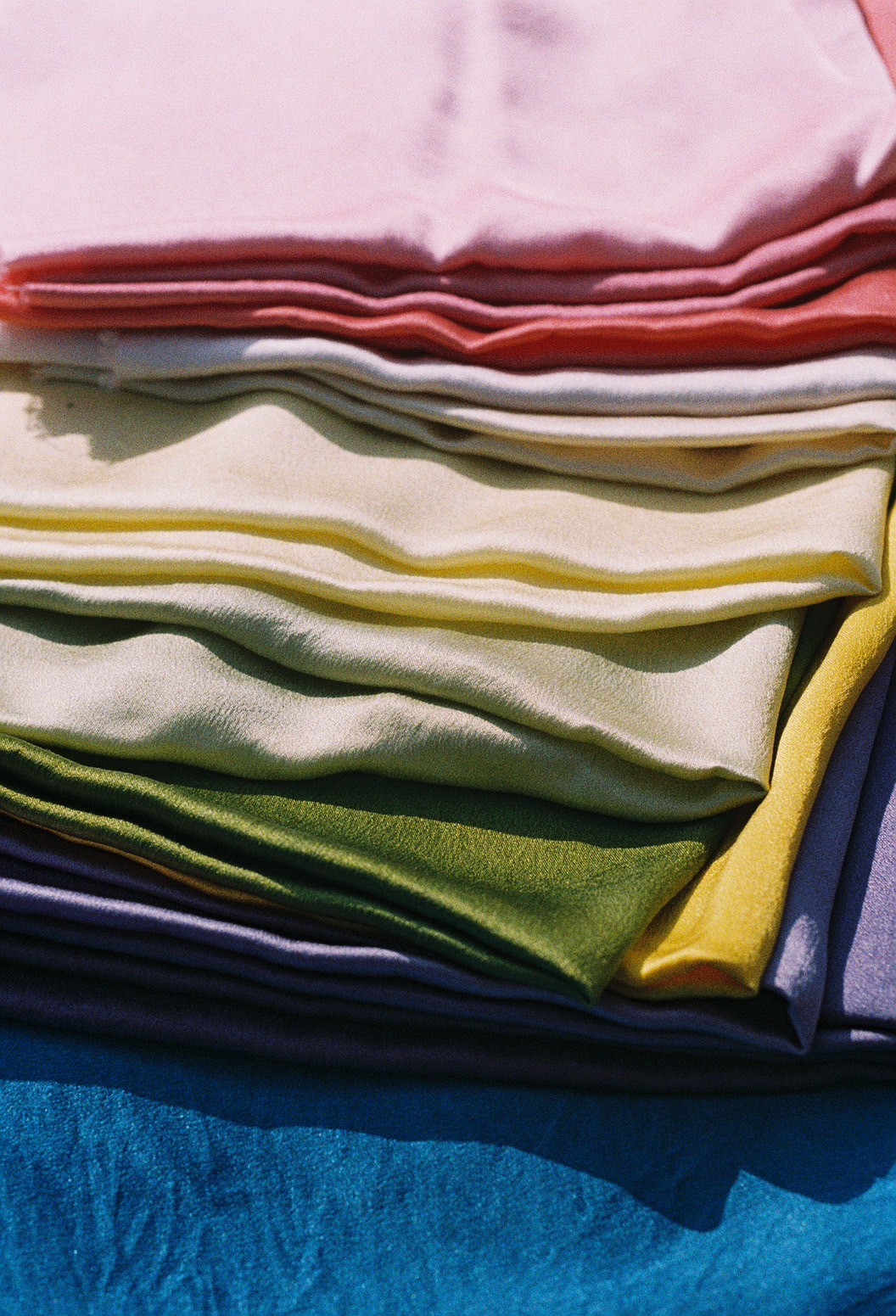
2026年のeit swim草木柄スイムウエアは、草木染めコレクティブのWUYさんにご協力いただき誕生しました。
自然の摂理に寄り添い、環境に配慮した安全な素材を用いたオリジナルプロダクトの制作や、草木染めによる衣類の染め直し「Re: 染め」のプロジェクトなどを手がける、ご夫婦のユニットです。いつも、草木染めの世界の驚きと感動を教えてくださる山里章悟さんと歩美さん。今回は改めて、お二人の取り組みと、そこから生まれる学びや気づきについてお話を伺いました。
Our 2026 plant ink swimwear was created in collaboration with WUY, a plant-dye collective. This husband-and-wife unit works on original products made with safe, eco-conscious materials, as well as a clothing re-dyeing project called “Re: Zome”. Shogo and Ayumi Yamazato always convey the wonder and beauty of the plant-dyeing world. We spoke with them about their work and the insights and lessons that arise from it.
── 「Re:染め」(りぞめ)のプロジェクトについて教えてください。
草木染めのアップサイクルの取り組みです。地域で生まれる、家庭など身近な身の回りの廃棄植物を染料にしています。年間何万トンとも言われている廃棄に向かう衣類を植物で染め、蘇らせて、減少させていけたらという、循環の取り組みです。
具体的には、個人の服を染め直して送り返すサービスの提供や、ワークショップなどを通して家庭でもできる染め直しのレクチャーをしています。
── 草木染めを始めたのは、子育てを初めて環境問題を考えるようになったことがきっかけだったとか。詳しく伺うことはできますか。
当時は20代前半で、無知でした。でも子供が生まれたことで暮らしや人生(生き方)、食、環境の選択が自分ごとに。どういう子育てがしたいか、次世代にどういう環境を残していきたいか、子供のために自分にできることってなんだろうって必死に考えて、情報を集めるようになり、その延長線上で出会ったのが草木染めでした。草木染めは子供との色遊びから始まりました。料理で出た玉ねぎの皮を使って色遊びしたり、お散歩の途中で木の実や葉っぱ、花を積んで、染めてみたりして。植物でこんなに染めることができるんだ、と草木の色の美しさがわかるようになりました。
── Could you tell us about the “Re: Zome” project?
It’s an upcycling initiative using plant dyes. We use discarded plants from households and local areas as dye material. With tens of thousands of tons of clothing thrown away each year, our goal is to revive garments through plant dyeing and reduce waste, creating a cycle of reuse.
Specifically, we offer a service to re-dye personal clothing and hold workshops where people can learn how to do it at home.
── I heard that you started plant dyeing after becoming parents and beginning to think about environmental issues. Can you share more about that?
Back then, we were in our early twenties and very naïve. But having children made lifestyle, food, and environmental choices a personal matter. We began seriously thinking about what kind of parenting we wanted, what environment we wanted to leave for the next generation, and what we could do for our kids. In searching for answers, we discovered plant dyeing.
It started as color play with our children—using onion skins from cooking, collecting nuts, leaves, and flowers on walks, and experimenting with them. We realized how beautifully plants can color fabric.
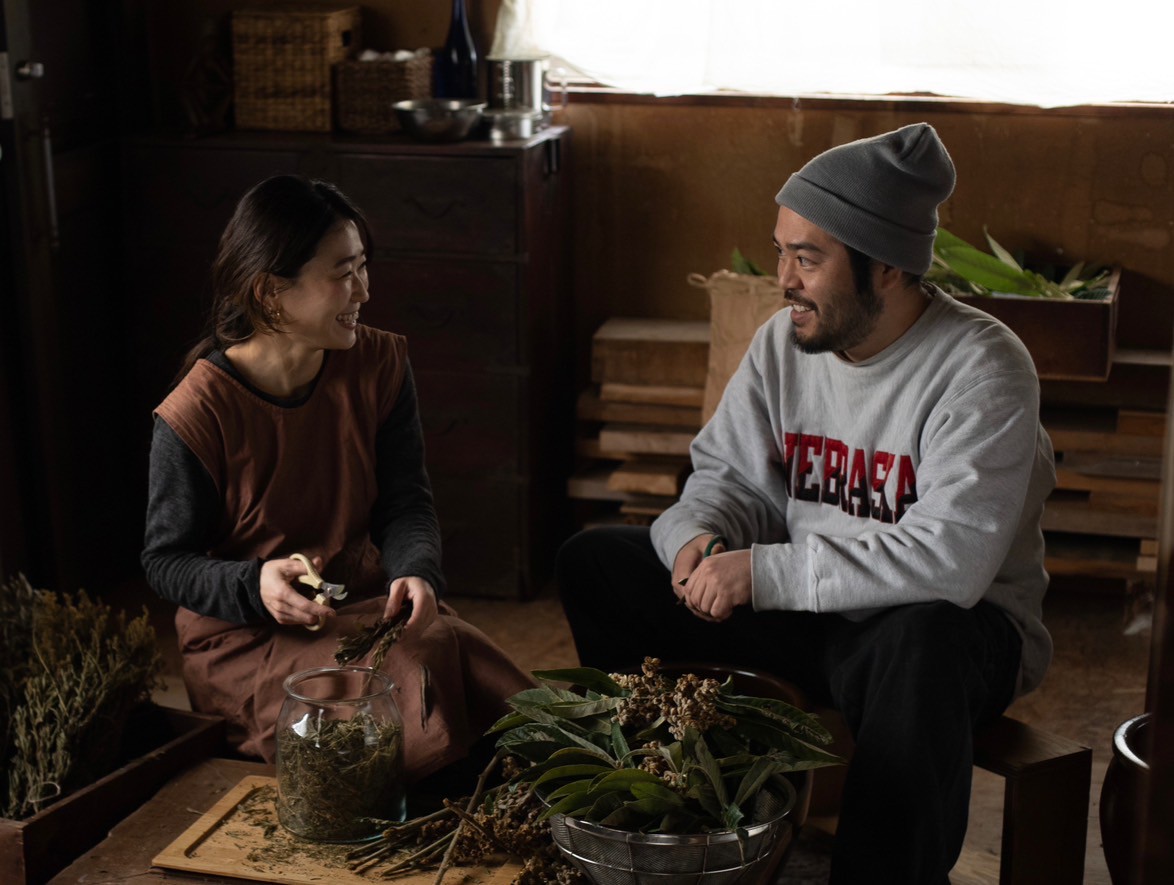
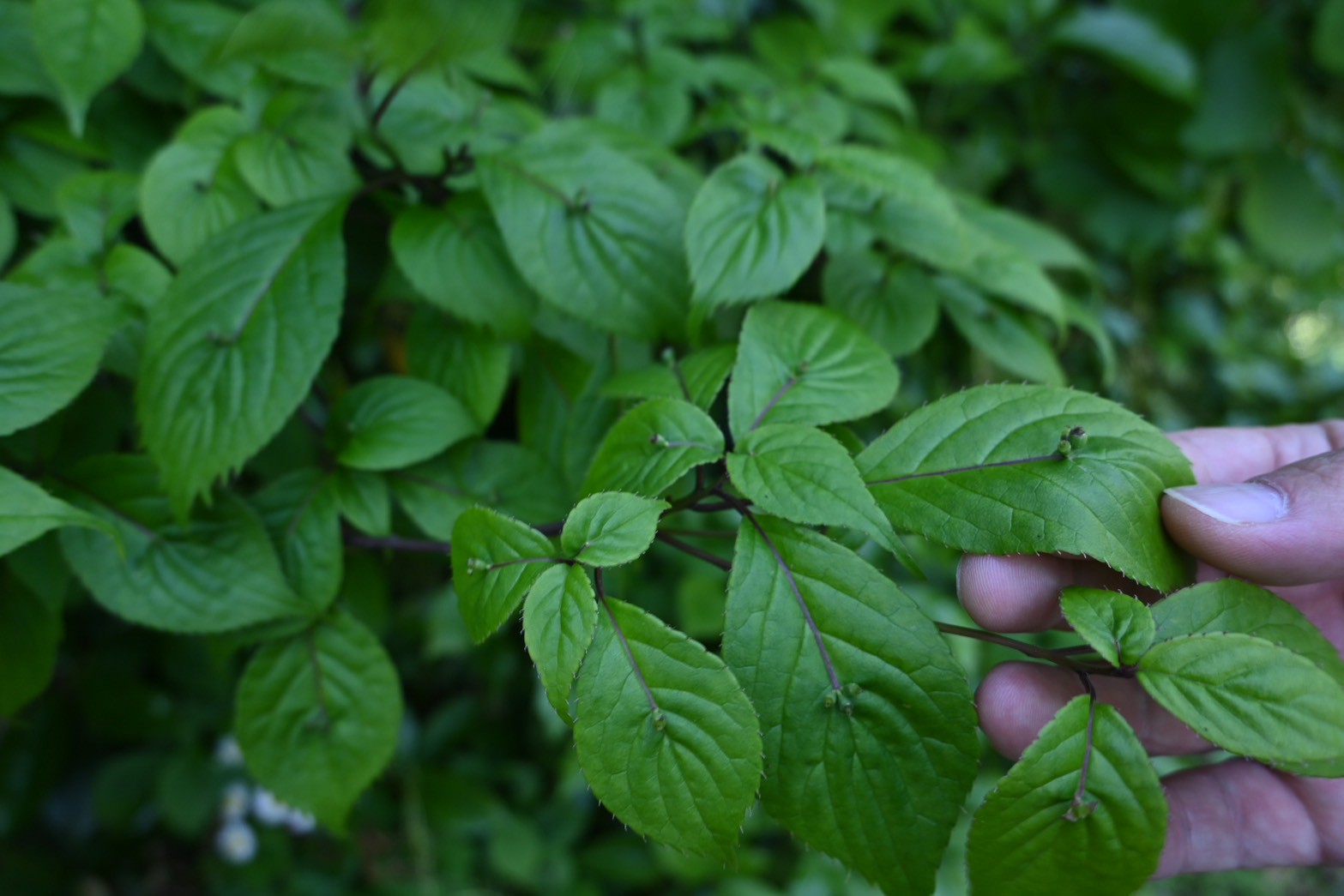
── 草木の持つ色って独特で、温かみがあって、バリエーションもあって。まさに自然の恵みですよね。
そうなんです。それに加えて植物の持っている成分が効果的で。生地を強くしたり虫を寄せ付けないだけじゃなく、衣類を身に纏うことで経皮吸収によってその効能を得られることもわかりました。例えば血行を良くしたり、体を温めたり。
今はドラッグストアでお薬でもなんでも買えますけど、昔の人は植物の力をうまく取り入れて暮らしていたということも知りました。もちろん環境にも優しいのも嬉しい。
染め直すだけで、身体にも良いし、リラックス効果もあるし、香りも良いし、「いいことづくしやん」って思って。どんどん暮らしに取り入れるようになりました。娘が2人いて、上のお姉ちゃんの服を染め直して下の子にまた着てもらうと子供が喜んだりして、暮らしが豊かになった実感があったんです。それをシェアしていきたいなと思いました。
── 草木染めのプロセスの中で、自然から教わったことや気づいたことはありますか?
それはもう、たくさんありすぎて(笑)。その時期にしかない木の実、樹皮、葉、根っこ、花などあらゆる部位が色になる素晴らしさとか。同じやり方でも違う色になって、思ったようにならないとか。その色を求めるために待つ時間が必要だったりとか。
トライアンドエラーで、思い通りに行かないからこそ見えてくる美しさ、そこに惹かれました。やっていく中で自分の在り方も変わっていったんです。“待つ”ということ、自然のリズム、焦らないことの大切さ。行為と精神が紐づき、自分が整っていく感覚がありました。
── The colors plants create are so warm and unique, with endless variations—it’s truly nature’s gift.
Exactly. On top of that, the components in plants have benefits—they strengthen the fabric, repel insects, and even provide effects through skin contact. For example, they can improve circulation and warm the body.
Nowadays you can buy anything at a drugstore, but people in the past incorporated plants’ power into their lives. It’s environmentally friendly, good for the body, relaxing, and fragrant—“all good things,” we thought. When we re-dyed our eldest daughter’s clothes for our younger daughter, she was thrilled, and it enriched our daily life. We wanted to share that joy with others.
── What lessons or insights have you gained from working with nature in plant dyeing?
So many! The beauty of using seasonal fruits, bark, leaves, roots, and flowers, the way the same technique produces different colors, and how you sometimes need to wait for the desired shade.
Through trial and error, we came to appreciate the beauty that arises from unpredictability. The process also changed our own mindset—learning to “wait,” follow nature’s rhythm, and not rush. The act of dyeing became linked to inner alignment.
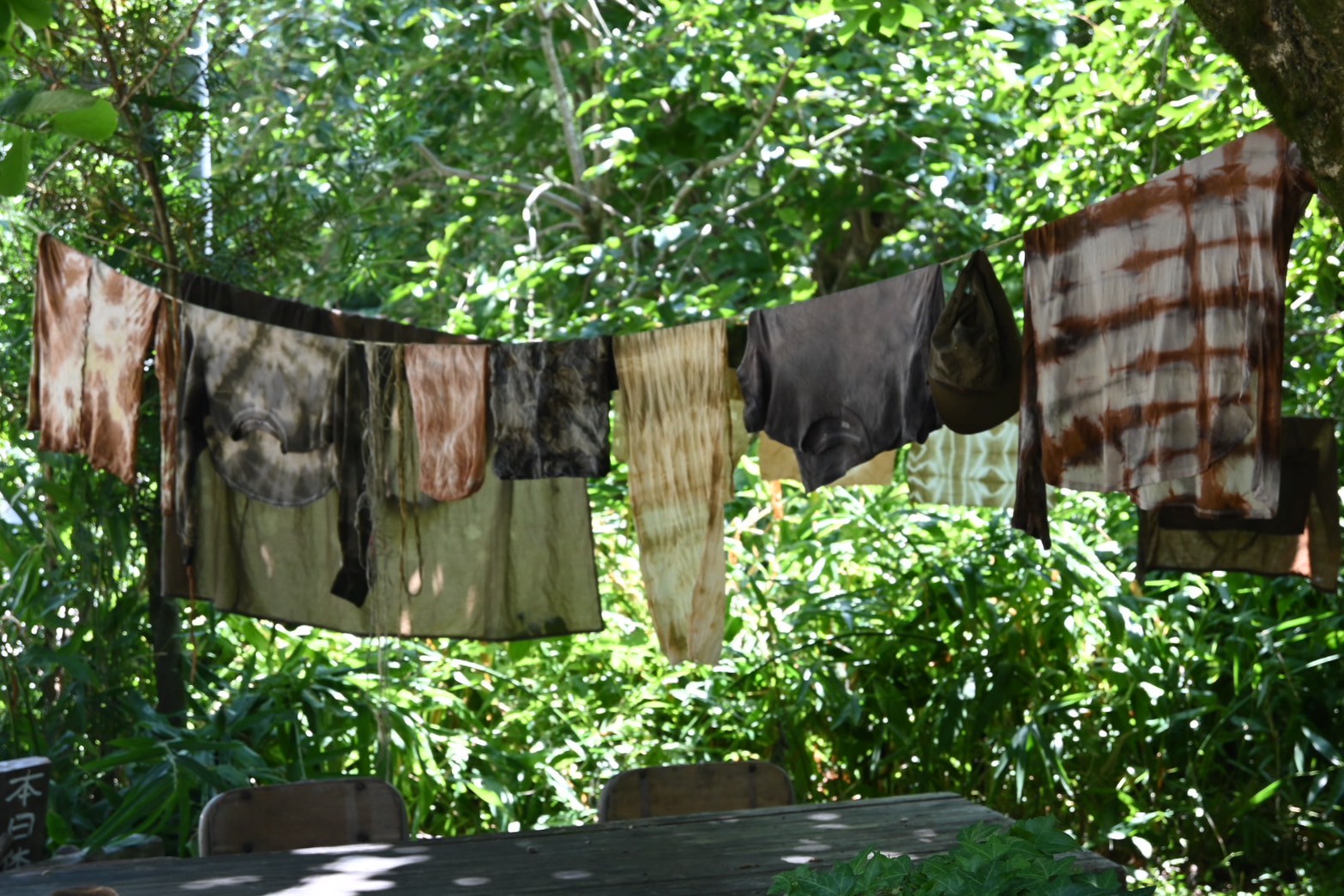
──特に日本には四季があるからこそ、古来より、季節や土地ごとに異なる微細な色の違いを大切にしてきたんでしょうね。そこに、日本独自の美意識が育まれてきた理由があるように思います。
赤や青、黄色といった単純な分類だけではなくて、和の色には季節や風景、草花から連想されたたくさんの名前が付けられていますよね。そこには“色”というものが、固定されたものではなく、移ろいゆく自然の一部として受け取られてきた感覚があるんだと思います。
古来の人々にとって、色は、“人が作り出すもの”というより“自然からいただくもの”という前提があったんだろうと。
古代の染師のあいだで語り継がれてきた口伝があって、私も忘れないようにしている一節があります。
『草木は人間と同じく自然より創り出された生物である。染料となる草木は自分の命を人間のために捧げ、色彩となって人間を悪霊より守ってくれる。だからこそ、愛(なさけ)をもって扱い、感謝と木霊への祈りを持って染の業に向き合うべきである』この感覚こそが、日本の色の文化の根っこにあるものだと思っていますし、受け継いでいきたいことです。
── Japan’s four seasons must have played a role in cultivating a unique aesthetic sensibility around color.
Absolutely. Japanese colors are not just simple red, blue, or yellow—they are named for seasons, landscapes, and flowers. Color has always been seen as part of the ever-changing natural world rather than something fixed.
An old saying among traditional dyers that I hold close goes:
“Plants, like humans, are created by nature. Those that become dyes give their life for humans and protect us from evil spirits through their color. Therefore, they should be treated with compassion, gratitude, and a reverent spirit when working in dyeing.”
This mindset is the root of Japan’s color culture, and we want to preserve it.
──染まり方が予想と違うとき、その偶然性をどうとらえていますか?
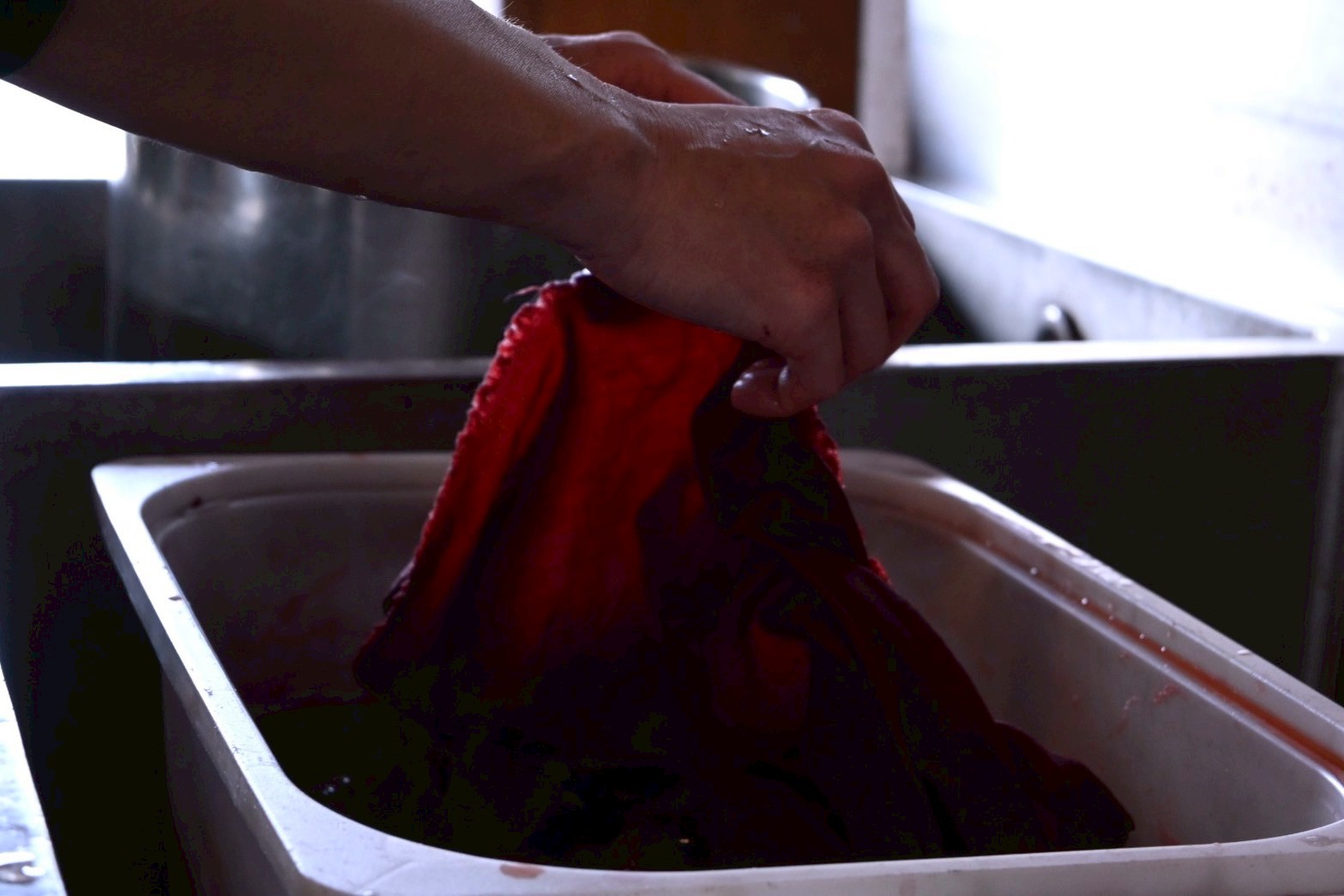
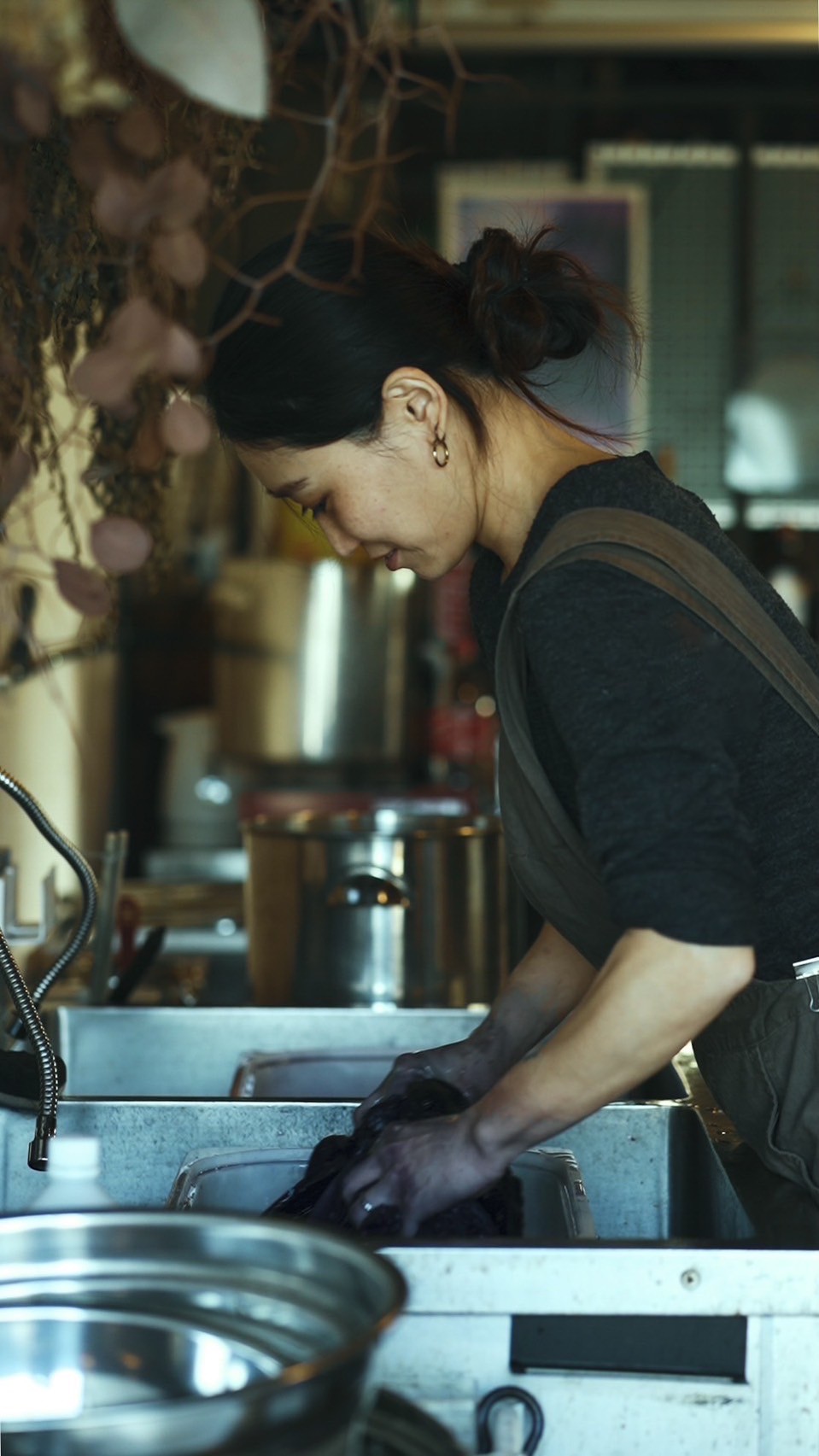
その偶然性が草木染めの一番の魅力だと思っています。「Re:染め」でいろんな古着を見てきましたが、昔のシミとかが浮かび上がってきちゃうんです。最初はやっぱり、「綺麗に染めたい」という理想が強くあったから苦戦しました。でもそれは“失敗”として見ていたからなんだなって。今では、色をコントロールするよりも、「どうやったらまた着られるようになるか」「生まれ変わるのか」を考えるようにシフトしました。偶然性を良いところとみなしたら、解決に向かっていけることがわかったんです。
──それじゃあ、私たちeit swimからの「こういう柄にしてほしい」なんて注文は、大変だったんじゃないでしょうか……。
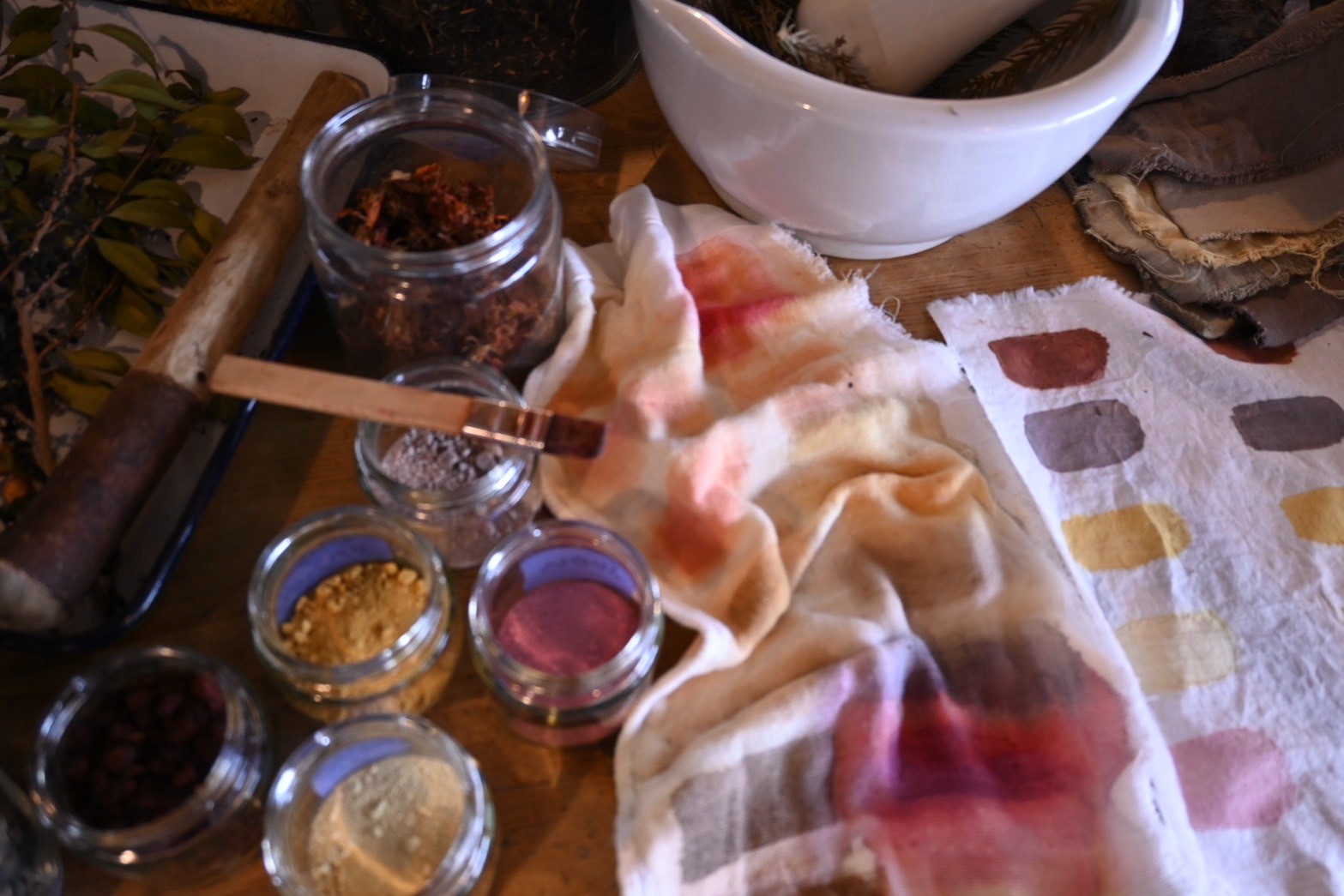
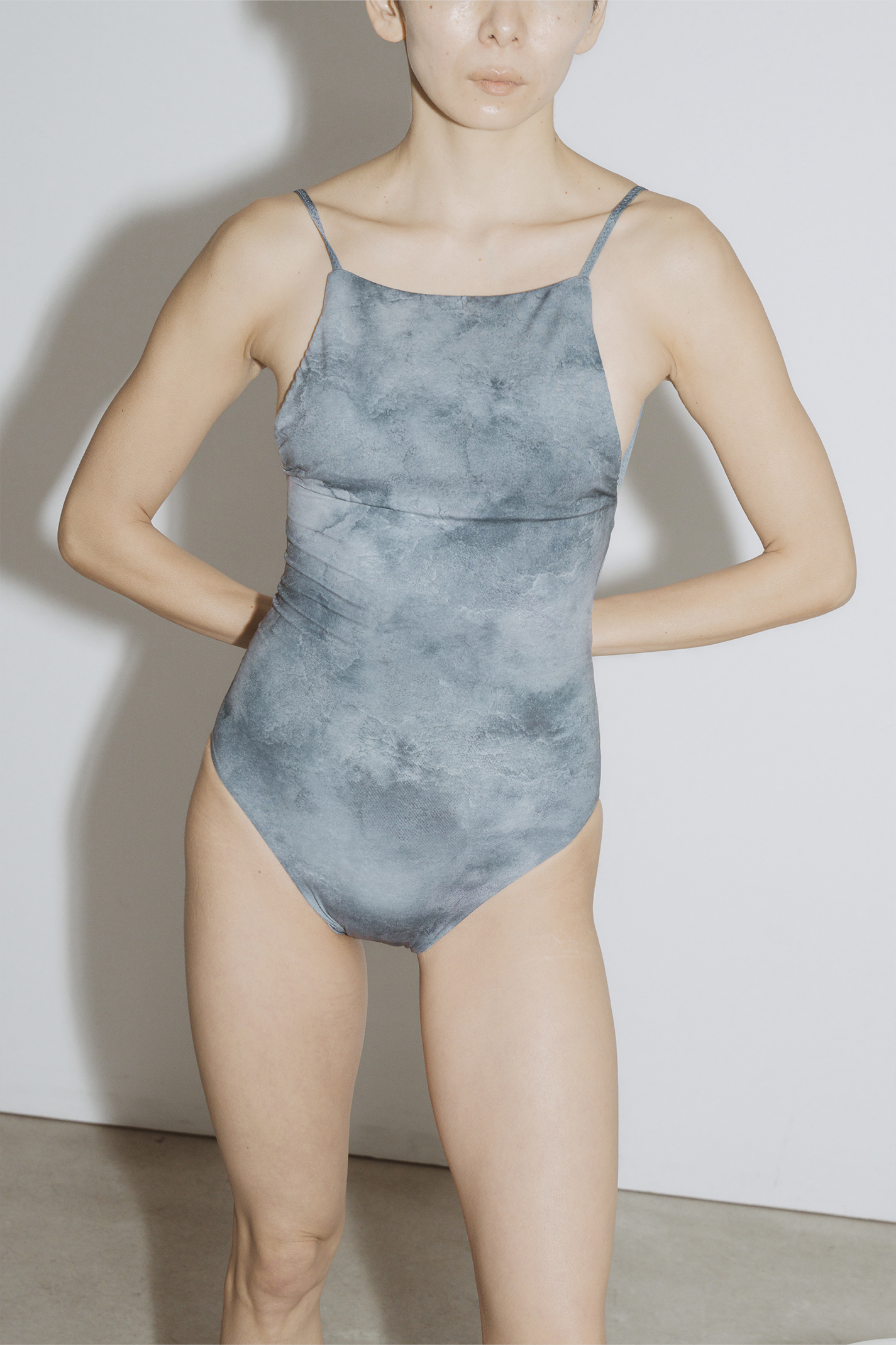
いやいや、このデザインは、まさに偶然性をうまく活かした柄なんですよ。液を作って、筆にのせて描く、水彩画みたいな感じ。植物のインクって、植物のそれぞれの粒子と、鉱物の掛け合わせで色ができる。発色を変えるために、アルミや銅を使うんです。植物の性質や鉱物によって、紙にのせたときに勝手に動くので、自然のにじみだったり、植物の色と色が混ざるときに出る“ゆらぎ”を、デザイナーには意識してもらったんです。
── 環境問題に対して、大きなアクションではないけれど身近な一歩、自分たちができることからスタートするという向き合い方がeit swimが大切にしている考えと同じだと感じて、今回オファーさせてもらいました。こうして一緒に取り組みができたこと、繋がれたこと、とてもよかったです。
私たちもコラボレーションをする際には、そこを一番大事にしています。同じ方向を向いている仲間とアプローチしていけたらいいなと思いました。ただ制作する時だけじゃなく、今後また広がればと思っています。
── How do you approach unexpected results in dyeing?
The unpredictability is the greatest charm of plant dyeing. In “Re: Zome,” we see all kinds of old garments, and sometimes old stains appear. At first, we struggled because we wanted perfect results. But we realized that seeing imperfections as “failures” was limiting. Now, we focus on how the piece can be reborn and worn again. Treating unpredictability as a positive opens the path to solutions.
── I imagine working with our design requests was challenging?
Not at all—the pattern for this collaboration actually leverages unpredictability. We mix the liquid, apply it with a brush, much like watercolor painting. Plant inks interact with minerals like aluminum or copper to produce color. On fabric, the pigments move naturally, creating gentle gradients and fluctuations. We asked the designer to embrace this “flow” of color.
── For us at eit swim, it’s important to start with small, personal steps toward environmental action. Collaborating with partners who share this mindset is very meaningful.
Exactly. We prioritize working with people who share the same direction, not only during production but also for future initiatives.
【eit swim 公式LINE】
発売の最新情報はLINEで。限定特典やクーポンなども配信しています。登録はこちらから。